

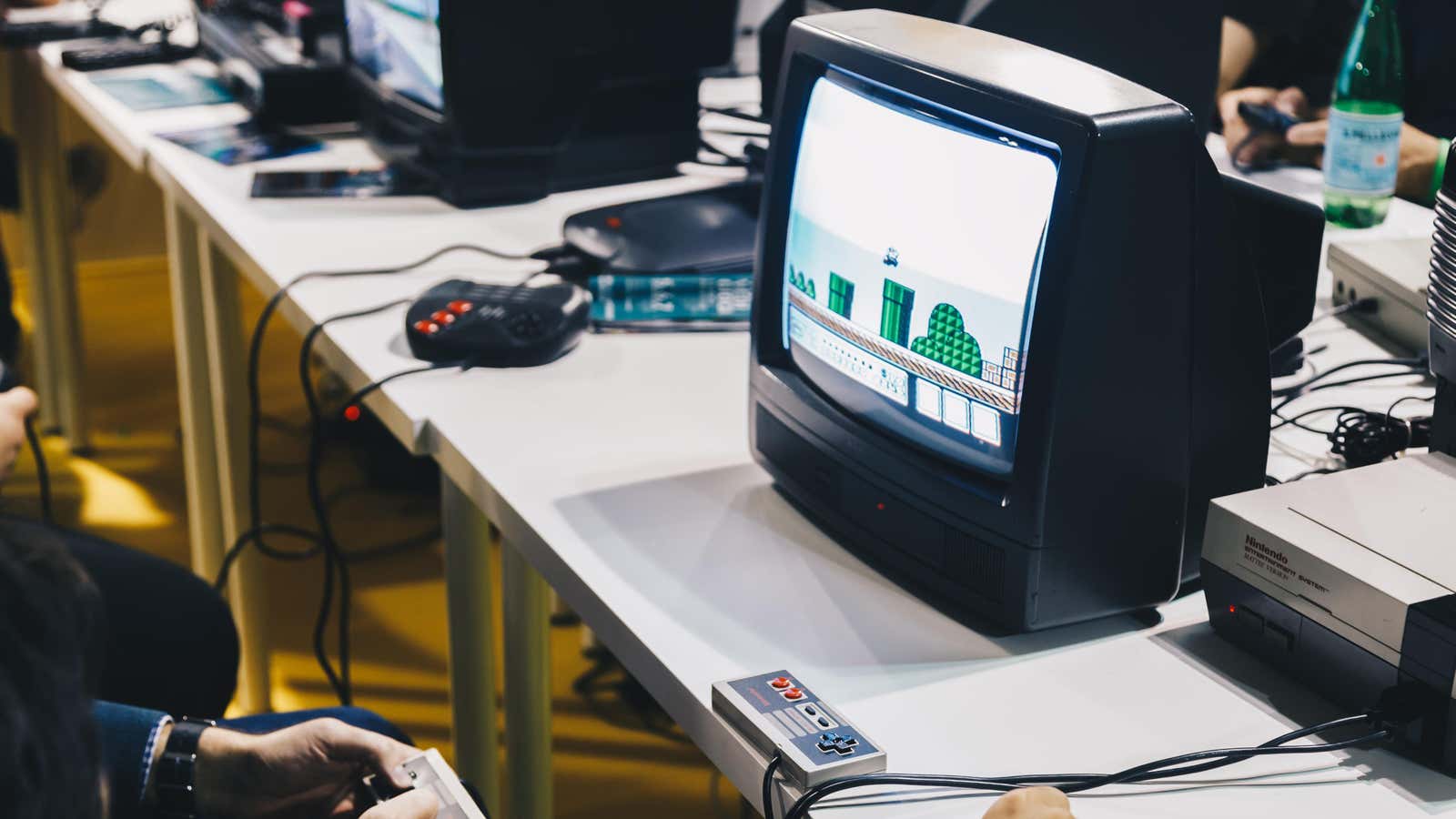
إذا كنت تمتلك وحدات تحكم قديمة – على سبيل المثال ، Super Nintendo أو Sega Genesis – يمكنك الوصول إلى بعض أعظم جذور الألعاب. ومع ذلك ، قد تجد أن توصيل وحدات التحكم الرائعة هذه بجهاز التلفزيون الحالي لا ينتج عنه التجربة التي تتذكرها من السنوات الماضية. تبدو الألعاب مشوشة ومشوهة ، وقد يكون من المغري أن تعتقد أن ذاكرتك تلعب حيلًا عليك. إنها ليست ذاكرتك ، إنه تلفزيونك.
لمحبي الألعاب الرجعية ، CRT هو العرض المفضل. تلك الأجهزة التلفزيونية العملاقة المليئة بالصناديق التي رفضها الجميع تقريبًا أو تخلوا عنها لصالح اللوحات المسطحة الحديثة مرغوبة في الواقع لقدرتها على عرض الألعاب بشكل صحيح من الثمانينيات والتسعينيات وحتى جزء من الفترات. دعنا نستكشف السبب.
الألعاب القديمة ليست مصممة لأجهزة التلفزيون الحديثة كثيفة البكسل
يرجع السبب الرئيسي وراء عدم ظهور الألعاب القديمة بشكل رائع على أجهزة التلفزيون الحديثة إلى وحدات البكسل ؛ بالنسبة للشاشات الحديثة غير المبتدئة ، تتكون من وحدات بكسل – “نقاط” فردية ، عند دمجها معًا ، تشكل الصور التي تراها على جهاز التلفزيون.
يشير 1080p إلى الشاشات التي يبلغ قطرها 1920 بكسل ، و 1080 بكسل لأسفل. 4K ، من ناحية أخرى ، يشير إلى 3840 عبر 2160 لأسفل. بينما هناك طريق عدد وحدات البكسل في شاشة 4K أكبر من شاشة 1080 بكسل (8،294،400 مقابل 2،073،600) ، تحتوي هاتان الشاشات على طريق تم تصميم وحدات بكسل أكثر من الألعاب القديمة لملئها.
دعونا نلقي نظرة على متنوعه الجيد ol ‘NES. إذا أطلقت لعبة سوبر ماريو بروس. ، أسطورة زيلدا، أو ميترويدبصرف النظر عن الأعمال الفنية المبهجة ذات 8 بتات واللعب الكلاسيكي ، فإن ما تراه هو 256 بكسل أفقيًا × 240 بكسلًا رأسيًا ، أو إشارة 480i. يبدو هذا القرار رائعًا على أجهزة التلفزيون القديمة ؛ لا تحتوي شاشات CRT هذه على وحدات بكسل ، ولكنها تحتوي على “خطوط”. يأخذ التلفزيون الإشارة من وحدة التحكم في الألعاب ويعرضها سطرًا واحدًا في كل مرة (المزيد حول ذلك لاحقًا).

 Save 20%
Philips One by Sonicare
It all starts with oral health, baby
With micro-vibrations, a timer, and easy charging, it’s an exceptional toothbrush for making the transition from a manual to an electric.
Buy for $12 at Amazon
But when you take a 256 x 240 signal and connect it to a 1080p or 4K TV, things get a bit…blurry. Because the console is outputting fewer pixels than the display it’s connected to, your TV needs to upscale that image in order to properly display it. That involves taking the pixels from the retro game console’s signal and blowing them up to fit in the much more expanded pixel grid of your TV. This upscaling results in a blurry, less defined look than intended, and can be a bit off-putting, especially if you’re playing games you remember looking great years ago.
Scanlines give retro games a distinctive look
It’s not just the pixels themselves that make things look great, however; scanlines are another factor, and are a natural byproduct of displaying a 256 x 240 signal on a CRT.
Advertisement
Remember, the images you see on screen are actually broken down into a bunch of horizontal lines. As it happens, 240 horizontal lines is, in actuality, only half of the real estate these TVs provide. So, instead of squashing the image down, the TV skips every other line, placing a line of blank space between each line of your game, also known as interlacing (which is the “i” in the 480i signal). That results in “scanlines,” and plays a big part in giving retro games their distinctive look.
Keep an eye on the connections
Not all CRTs are the same, by the way. There are a variety of different connection options out there, and they matter for how your TV displays the signal from your console. Component video is the most sought-after, which uses three plugs for video and two for audio. Composite cables work fine (two for video, one for audio), but they don’t have the clarity of component.
Advertisement
If you find a TV that doesn’t have component hookups, check if it at least has S-Video, which offers a middle ground quality between the other two connection types.
It’s not just about the look
While we’re focusing on the appearance of retro games, there’s another big advantage to using a CRT for these titles; input lag, or—to clarify—the lack thereof. Modern TVs, by their nature, have some input lag. That means, when you press a button on your controller, there’s a slight delay before the action is performed on screen.
Advertisement
With CRTs, there is no input lag, because the screen technology is simple enough to instantaneously react to your inputs. While this lack of lag is essential for professional gamers or speedrunners who rely on precise timing, all of us can appreciate the tighter control that a CRT offers.
There are alternatives to CRTs for retro gaming
The CRT might be the ideal way for most retro gamers to play these titles, but there are other solutions to improve your experience without one. For example, the titles included on consoles like the NES Classic and the SNES Classic are upgraded to natively run on HD TVs. Mario is going to look a lot better on your flatscreen from an NES Classic than an actual NES, because he’s designed to match the pixels on your newer TV.
Advertisement
If digital emulation is your avenue to retro gaming, many emulators include options to “fake” the look of CRTs; you’ll find options to add scanlines to your games, and while they won’t look quite as good as the real deal, they can better replicate the experience many enjoy CRTs for.
At the end of the day, you don’t need anything special to enjoy retro games. It’s still the same game, after all, whether you hook it up to the ideal display, or play it on the hardware you already have. If you’re looking to maximize that experience, however, it’s good to know both how and why.
Advertisement
Like any hobby, creating the ideal retro gaming experience can be a bit of a rabbit hole. You’ll find modded game consoles, different types of CRTs, and European connection types, among other improvements. I highly recommend الشرح الرائع My Life in Gaming على ألعاب CRT إذا كنت مهتمًا بمعرفة المزيد.
